


When journalist Margena A. Christian set out to write It’s No Wonder: The Life and Times of Motown’s Legendary Songwriter Sylvia Moy, her goal was clear: to spotlight a groundbreaking woman whose contributions to Motown history had long been overlooked. Instead, the book’s release has sparked an unexpected and emotional dispute between the author and Moy’s family — turning what was meant to be a tribute into a public controversy.
The Woman Behind Motown’s Magic
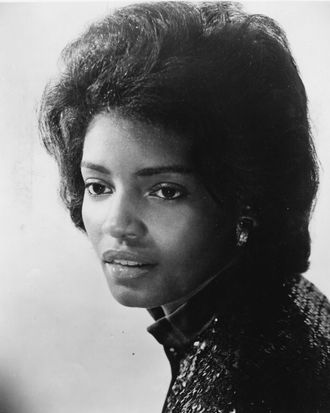


Sylvia Moy was no ordinary songwriter. Born and raised in Detroit, she joined Motown Records in 1964 and quickly made history. In 2006, she was inducted into the Songwriters Hall of Fame — recognition for a career that reshaped the sound of soul and pop music.
Moy is widely credited with helping rescue the career of a young Stevie Wonder. At the time, Wonder’s chart success had begun to stall. Moy co-wrote “Uptight (Everything’s Alright),” a song that climbed to No. 3 on the Billboard Hot 100 in 1966 and reignited his trajectory.
Her creative partnership with Wonder didn’t stop there. She also helped craft “My Cherie Amour” and “I Was Made to Love Her,” both Top 5 hits. Beyond Wonder, Moy co-wrote “It Takes Two” for Marvin Gaye and Kim Weston, “This Old Heart of Mine (Is Weak for You)” for The Isley Brothers, and singles for Martha and the Vandellas.
She passed away in 2017 at age 78, but her influence continues to echo across generations.
Claims of Hidden Contributions
In researching the book, Christian says she uncovered evidence suggesting Moy’s role at Motown extended beyond songwriting. According to the author, Moy also worked as a producer — a rare and groundbreaking position for a woman in the male-dominated music industry of the 1960s.
Christian argues that Moy did not always receive proper acknowledgment for her behind-the-scenes production work. The book further suggests that she contributed, without formal credit, to songs like “Signed, Sealed, Delivered I’m Yours” by Stevie Wonder and “Ain’t Too Proud to Beg” by The Temptations.
“She was the first female to both write and produce at Motown,” Christian has said in interviews. “She did produce — but she never received official credit.”
The project began during the pandemic, when Christian came across a photograph of Moy alongside Stevie Wonder and members of Motown’s legendary Funk Brothers studio band. Curious about why Moy’s name wasn’t more widely known, she began digging — and what she found, she says, was remarkable.
Cooperation Turns Into Conflict
Christian interviewed several notable Motown figures for the book, including Smokey Robinson, Martha Reeves, Eddie Holland, Barrett Strong, and others who were part of the Motown inner circle.
Initially, Moy’s family also participated in the project. According to Celeste Moy — a veteran music industry attorney and co-manager of the Estate of Sylvia Moy — the family signed a written agreement with Christian in 2023, before any publishing deal was finalized.
The agreement, Celeste says, included commitments to portray Moy positively and to compensate the family for their involvement. The family opened doors to key Motown figures and provided private photographs not previously available to the public.
However, tensions reportedly surfaced as publication approached.
Celeste Moy claims the family was not informed when a publishing deal was secured. She says they were not given the opportunity to review the manuscript and only saw the finished book less than two weeks before its release. Communication from Christian, she adds, eventually stopped altogether.
“We treated her almost like family,” Celeste has said. “There were stories and materials no one else had access to. So yes, we feel deeply betrayed.”
Despite their concerns, the family did not attempt to legally block the book’s release. Instead, they have stated they will not promote or support it while the dispute remains unresolved — though they have indicated they are prepared to pursue legal action if necessary.
The Author’s Response
Christian disputes the family’s claims.
“I did nothing wrong,” she has maintained. According to her and her attorney, all agreements were properly handled. The family was reportedly paid more than $2,200 for the use of photographs, and no contractual requirement existed for advance manuscript review.
Her legal team has described the family’s allegations as lacking legal standing and insists that any unspecified compensation would be addressed after publication, depending on sales performance.
Christian has also emphasized that her primary focus remains honoring Moy’s accomplishments — particularly as a woman who broke barriers in a male-dominated industry.
“The only light she wants to shine,” her attorney has said, “is on Sylvia Moy and her achievements.”
A Legacy Larger Than the Dispute
The controversy raises complicated questions about ownership of legacy, authorization, and trust in biographical storytelling. On one hand, Christian’s book aims to restore Moy’s place in music history, highlighting contributions that may have gone unrecognized for decades. On the other, the family’s concerns underscore the emotional and legal complexities that often surround posthumous storytelling.
At the heart of it all remains Sylvia Moy — a pioneering songwriter and producer whose fingerprints are all over some of Motown’s most beloved records.
Whether the disagreement resolves quietly or escalates further, one thing is undeniable: Moy’s impact on American music is secure. And perhaps, despite the tension surrounding the book, renewed attention to her life will inspire a deeper appreciation of the woman who helped shape the Motown sound.
In the end, the bigger question may not be about contracts or disputes — but about how history remembers its trailblazers.


