


There’s a moment in every villain’s story where you can still see the person he used to be. “814” is built around that moment – and everything that led up to it.
The track centers on Dennis, better known as The Shadow, and asks a question that doesn’t get asked enough in stories about men who turn dark: what if his pain was real, and he still became the villain anyway?
This isn’t a revenge fantasy. It isn’t an excuse. It’s an attempt to hold two things that are usually treated as mutually exclusive – that Dennis was genuinely wronged, and that Dennis is fully responsible for what he did with that wound.
The Friend Who Knew Exactly What She Was Doing

Mandy never owed Dennis a relationship. Her rejection isn’t the betrayal – she has every right not to feel what he feels. The betrayal is in what she does with his feelings once she knows about them.
She keeps Dennis close. Close enough for the attention, the reassurance, the emotional labor he’s always willing to provide – never close enough to give him what he actually wants. And when he tries to move on, she quietly makes sure he can’t. Not because she wants him, but because she doesn’t want to lose what he gives her.
Then she hooks up with Gabriel, Dennis’s best friend, and does it knowing exactly what that means to him.
In Dennis’s mind, Mandy stops being a person and becomes a symbol: the woman who steps over the loyal man to get to the reckless one she claims to dislike. The song isn’t arguing that this is how all women behave. It’s showing how one experience, left to fester, becomes the lens through which a man starts judging everyone.
The Brother Who Chose Himself
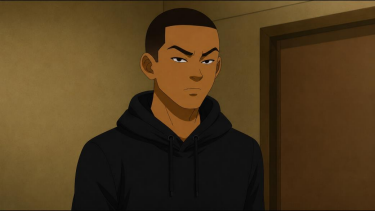
Gabriel is everything Dennis isn’t – confident, reckless, the guy women notice without trying. He knows Dennis is in love with Mandy. He knows what acting on his own attraction to her will cost. He does it anyway.
Mandy belongs to no one, and Gabriel’s choice was his to make. But brotherhood carries its own weight, and he set it down for a night with the one person guaranteed to break his best friend. That’s the betrayal – not that he “took” something, but that he knew exactly what it would take from Dennis and did it regardless.
For Dennis, it confirms the worst thing he’s ever suspected about the world: loyalty doesn’t earn love. Patience doesn’t earn respect. The guy who breaks the rules wins, and the guy who follows them gets left standing there.
The Second Betrayal, and the Man Who Nearly Ends It

Milano was supposed to be the healing. Instead, she becomes the pattern repeating itself – close, then gone, choosing a man named Coolie and leaving Dennis behind for a second time.
Years later, after Coolie turns abusive, Milano comes back. Not because she’s finally learned to value Dennis, but because she remembers exactly how useful his loyalty can be. She tries to manipulate him into eliminating Coolie for her.
Here’s where the song refuses to make anything simple: Coolie did abuse Milano. That’s real, and he’s accountable for it. But he’s innocent of the crime Dennis ultimately frames him for – Milano’s murder. Dennis picks Coolie precisely because his guilt is already believable. Nobody has to be convinced Coolie is capable of violence; Dennis just has to point.
That’s what makes Dennis dangerous. He doesn’t need to invent the flaws in the people he destroys. He finds the real ones and stretches them into justification for punishment that was never his to hand out.
The Man Who Handed Him the Weapon
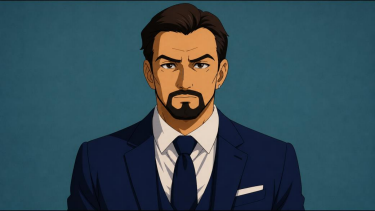
Dennis’s real transformation starts at his lowest point, after a suicide attempt, when Dominick pulls him back and takes him under his wing. What Dominick offers isn’t just survival – it’s a new way to see power.
He teaches Dennis Machiavellian thinking as a tool for a specific, practical purpose: taking down a dangerous enemy. And it works. But Dominick can’t see what’s happening underneath the strategy. For Dennis, manipulation stops feeling like a tactic and starts feeling like a superpower – the first time in his life he isn’t the one waiting to be chosen, waiting to be treated fairly. He can read people’s weaknesses now. He can lead them into traps they never see.
He falls in love with the control. What started as a means to an end becomes an identity. Dominick taught him to think several moves ahead – and unknowingly gave a grieving, resentful man the tools to turn private wounds into elaborate revenge.
The Turn
Nobody becomes a villain in one moment. Dennis is exploited, then betrayed, then taught – by every experience before Dominick – that kindness is something people take advantage of. After his suicide attempt, Dominick gives him a new identity built on strategy and control. And somewhere in there, protection curdles into domination. He murders Milano. He frames Coolie and lets the system finish the job. And in a twist even Dennis doesn’t see coming, an elderly witch who has been stalking him throughout Ritual III pulls Milano back from the grave and sends her to him as an undead assassin -After Dennis realizes she’s a gift not a new threat he has the resurrected Milano whack
Mandy & Gino. Every target genuinely wronged someone – Mandy exploited him, Gabriel betrayed him, Milano tried to use him, Coolie abused Milano. None of that makes Dennis their judge, and none of it means the story is done with him yet.
That’s the line “814” is trying to hold: everyone in this story is accountable. Not everyone is equally accountable. Dennis remains responsible for what he chose to become, no matter how real the wounds were that got him there.
What This Is Actually About
This song isn’t for men who want an excuse. It’s for men who’ve felt used, humiliated, replaced, or discarded by the people they trusted most – and it’s telling them their pain is real. Being emotionally exploited is real. Having your kindness read as weakness is real. Getting quietly discarded by someone who needed what you gave them but never wanted you is real.
None of that gives anyone ownership over another person. Rejection isn’t automatically betrayal. Pain doesn’t come with a permission slip to punish, control, or destroy. A man can be a genuine victim in one chapter and still be the villain of the next – and “814” wants to sit in that discomfort instead of resolving it.
Dennis’s tragedy isn’t that he was hurt. It’s that he never let that hurt become anything but a weapon. He got addicted to the one feeling manipulation gave him: never being powerless again.
If you see yourself anywhere in this story, the message isn’t you were never wronged. It’s this:
You may have been used. You may have been betrayed. You may have been pushed further than anyone around you understands. Your pain is real, and it deserves to be heard. But you’re still the one who decides what kind of man that pain turns you into.
What’s Next

Ritual III may be finished, but The Shadow isn’t done. “814” closes on the introduction of Nina – someone with no ties to Dennis’s revenge, no connection to any of the deaths that came before her. She’s not an epilogue. She’s a door opening on whatever comes next.
Listen to “814”: scapegoatmusic.com/814-video
Explore the Ritual III series: scapegoatmusic.com/s-projects-side-by-side
Contact: Thescapegoat92@gmail.com


